Jeopardy Game Maker: Create Custom Quiz Games Easily

Post Object ( [id] => 213 [created_date] => 1784851200 [slug] => jeopardy-game-maker [thumbnail_url] => /files/images/jeopardy game maker.webp [title] => Jeopardy Game Maker: Create Custom Quiz Games Easily [content] =>

I have a confession to make: I am an absolute, unrepentant trivia snob. It started back in my high school days, metastasized during college pub nights, and reached a chaotic, competitive peak during the 2020 lockdowns when everyone and their mother was hosting virtual quizzes. But let’s be real for a second. There is a massive, yawning chasm between a trivia night that flows like a well-oiled machine and one that drags on like a rainy Tuesday afternoon in a waiting room.

And the difference almost always comes down to the tools. Specifically, finding a decent jeopardy game maker that doesn’t require a PhD in software engineering or a monthly subscription fee that rivals my actual utility bills. Because let's face it: we've all sat through those agonizing sessions where the host is frantically clicking around a broken slideshow presentation while everyone else awkwardly sips their drinks in silence.

The Anatomy of a Slideshow Nightmare (And Why We Need Better Tools)

We’ve all been there. You find a "free template" online. It looks promising. It has those classic blue squares. But then the game starts, and everything goes off the rails. You click on "History for $200," read the clue, and then... how do you get back to the main board? You press the back arrow, but wait, the entire slideshow resets! Or worse, the $200 square doesn't change color, so five minutes later, someone else tries to select it again, leading to a loud, wine-fueled argument about whether that question was already answered.

It’s a complete mess.

During my five years working as an informal event coordinator for a tech startup, I remember when the manual PowerPoint approach first emerged as our default team-building activity. I once spent three hours manually hyperlinking slides for a Friday afternoon social. Three hours! I felt like an absolute fool. Naturally, the links broke the second I transferred the file to the presenter's laptop because of a minor version mismatch. That was the exact day I swore off manual slide decks forever.

The truth is, manual decks are a relic of a bygone era. They aren't dynamic, they don't keep score, and they don't adapt to the chaotic energy of a live crowd. We need systems that actually keep track of the game state automatically. When a question is answered, it should stay answered. It's not rocket science, yet so many platforms still struggle to get this right.

Hunting for the Perfect Jeopardy Game Maker

Actually, that's not quite right it's not just about finding a tool that works, but finding one that matches the specific vibe of your crowd. Some platforms are incredibly complex, requiring you to write actual code or navigate a interface that looks like a legacy database from the late nineties. No thank you. I want something intuitive.

When I'm testing out a new board creator, I look for a very specific checklist of features:

  • True State Tracking: If a clue is clicked, it must disappear or change color on the main board. No exceptions.
  • Built-in Scorekeeping: If I have to scribble math on a notepad while keeping up the witty banter, my brain will short-circuit.
  • Media Integration: I want to be able to drop in a funny audio clip, a weird meme, or a YouTube video for those high-stakes Daily Double moments.
  • Zero-Install Playability: If my players have to download a weird third-party app to join, they simply won't do it. It needs to run smoothly in a standard web browser.

If you're tired of building everything yourself and just want to explore pre-made interactive experiences that run directly in your browser without the hassle of setup, you should check out the designs over at interactive web game creators. Seeing how seamlessly modern HTML5 games handle user input really makes you realize how clunky those old office slide decks actually are.

The Psychology of Keepin' Your Players Engaged

Here’s a little secret from someone who has run over a hundred trivia games: trivia isn’t actually about testing knowledge. I mean, sure, on paper it is. But in reality? It’s about ego, dramatic tension, and those collective, theatrical groans when someone misses an incredibly obvious answer. It's entertainment.

If your questions are too hard, the room goes dead silent. People start checking their phones. If they’re too easy, it just becomes a boring race of who can scream the answer first. You need balance. I personally swear by the "60/30/10" rule when building out my categories on a jeopardy game maker:

  • 60% "Gettable" Clues: Questions that most people in the room can figure out if they think about it for ten seconds. This keeps the energy high and positive.
  • 30% "Debatable" Clues: Questions that require some actual discussion, a bit of second-guessing, or a strategic guess.
  • 10% "Brain-Melters": Absolute deep-cut trivia that only the designated nerds in the room will know. This is where heroes are made.

And let’s talk about pacing. If you are hosting a digital game night over Zoom or Discord, lag is your absolute worst enemy. There is nothing worse than three people shouting the answer simultaneously while the software lags out. If you're running into issues with angry players complaining about delayed buzzers, you might want to share a quick guide on how to lower ping in games so everyone starts on a level playing field. Otherwise, you'll end up playing referee to a bunch of frustrated friends.

Customizing the Chaos

Once you find a tool that handles the technical heavy lifting, you can get incredibly creative. Some of the best games I’ve ever hosted had nothing to do with general knowledge. For my sister's birthday, I built an entire board dedicated to family inside jokes. Categories included "Times Sarah Cried at Target" and "Questionable Fashion Choices of the Early 2000s." It was a massive hit mostly because it was highly personalized.

But hey, maybe your crowd isn't looking for a wholesome family trip down memory lane. If you're hosting a weekend party that's less "classroom review" and more "chaotic social hour," you can easily integrate your trivia board with some classic party challenges. If you go that route, you'll definitely want to keep the official rules for kings cup game on hand to keep the energy flowing and ensure the transition between trivia rounds and party games is relatively smooth.

Frequently Asked Questions About Trivia Creators

Because finding the right software can be a bit of a minefield, I've compiled some of the most common questions I hear from fellow hosts, teachers, and trivia enthusiasts alike.

Do I need to pay for a premium jeopardy game maker?

Honestly, no. While some premium platforms offer fancy corporate branding options and massive audience limits, there are plenty of incredibly robust free tools out there. If you're just hosting a game for a classroom or a casual backyard barbecue, stick to the free versions first and see if they meet your needs.

Can I run these games if I don't have an active internet connection?

This is a big one. Many modern web-based creators require you to be online. If you are hosting your game night in a rustic cabin, a park, or a basement bar with terrible reception, look for tools that allow you to download the game as an offline-compatible HTML file beforehand.

How many categories and questions should my game board have?

The classic television format uses 5 categories with 5 questions each, making a total of 25 clues per round. In my experience, this is the absolute sweet spot. Anything longer tends to drag, especially if you have a chatty crowd that loves to argue over the fine print of your answers.

Is it hard to set up a double jeopardy round?

Not if you use a dedicated jeopardy game maker. Most modern platforms allow you to simply duplicate your board or add a "Round 2" page, which automatically doubles the point values. This saves you from having to manually rebuild your layout from scratch.

The Wrap Up

At the end of the day, a great game night isn't defined by having the most high-tech setup in the world. It’s about the laughs, the friendly arguments, and that glorious feeling of pulling an obscure fact out of the depths of your brain to save your team from defeat. But having a tool that actually works sure does make getting to those fun moments a whole lot easier. Stop fighting with PowerPoint. Find a dedicated board creator, prep some fun categories, and let the games begin.

[fields] => [extra_fields] => {"post-meta-title":"Jeopardy Game Maker: Create Custom Quiz Games Easily","post-meta-description":"Jeopardy Game Maker helps you build custom quiz games for classrooms, meetings, and parties with simple tools, fun templates, and easy setup.","post-meta-keyword":"jeopardy game maker","source_text":"","source_link":"","faq":""} )
Jeopardy Game Maker: Create Custom Quiz Games Easily

I have a confession to make: I am an absolute, unrepentant trivia snob. It started back in my high school days, metastasized during college pub nights, and reached a chaotic, competitive peak during the 2020 lockdowns when everyone and their mother was hosting virtual quizzes. But let’s be real for a second. There is a massive, yawning chasm between a trivia night that flows like a well-oiled machine and one that drags on like a rainy Tuesday afternoon in a waiting room.

And the difference almost always comes down to the tools. Specifically, finding a decent jeopardy game maker that doesn’t require a PhD in software engineering or a monthly subscription fee that rivals my actual utility bills. Because let's face it: we've all sat through those agonizing sessions where the host is frantically clicking around a broken slideshow presentation while everyone else awkwardly sips their drinks in silence.

The Anatomy of a Slideshow Nightmare (And Why We Need Better Tools)

We’ve all been there. You find a "free template" online. It looks promising. It has those classic blue squares. But then the game starts, and everything goes off the rails. You click on "History for $200," read the clue, and then... how do you get back to the main board? You press the back arrow, but wait, the entire slideshow resets! Or worse, the $200 square doesn't change color, so five minutes later, someone else tries to select it again, leading to a loud, wine-fueled argument about whether that question was already answered.

It’s a complete mess.

During my five years working as an informal event coordinator for a tech startup, I remember when the manual PowerPoint approach first emerged as our default team-building activity. I once spent three hours manually hyperlinking slides for a Friday afternoon social. Three hours! I felt like an absolute fool. Naturally, the links broke the second I transferred the file to the presenter's laptop because of a minor version mismatch. That was the exact day I swore off manual slide decks forever.

The truth is, manual decks are a relic of a bygone era. They aren't dynamic, they don't keep score, and they don't adapt to the chaotic energy of a live crowd. We need systems that actually keep track of the game state automatically. When a question is answered, it should stay answered. It's not rocket science, yet so many platforms still struggle to get this right.

Hunting for the Perfect Jeopardy Game Maker

Actually, that's not quite right it's not just about finding a tool that works, but finding one that matches the specific vibe of your crowd. Some platforms are incredibly complex, requiring you to write actual code or navigate a interface that looks like a legacy database from the late nineties. No thank you. I want something intuitive.

When I'm testing out a new board creator, I look for a very specific checklist of features:

  • True State Tracking: If a clue is clicked, it must disappear or change color on the main board. No exceptions.
  • Built-in Scorekeeping: If I have to scribble math on a notepad while keeping up the witty banter, my brain will short-circuit.
  • Media Integration: I want to be able to drop in a funny audio clip, a weird meme, or a YouTube video for those high-stakes Daily Double moments.
  • Zero-Install Playability: If my players have to download a weird third-party app to join, they simply won't do it. It needs to run smoothly in a standard web browser.

If you're tired of building everything yourself and just want to explore pre-made interactive experiences that run directly in your browser without the hassle of setup, you should check out the designs over at interactive web game creators. Seeing how seamlessly modern HTML5 games handle user input really makes you realize how clunky those old office slide decks actually are.

The Psychology of Keepin' Your Players Engaged

Here’s a little secret from someone who has run over a hundred trivia games: trivia isn’t actually about testing knowledge. I mean, sure, on paper it is. But in reality? It’s about ego, dramatic tension, and those collective, theatrical groans when someone misses an incredibly obvious answer. It's entertainment.

If your questions are too hard, the room goes dead silent. People start checking their phones. If they’re too easy, it just becomes a boring race of who can scream the answer first. You need balance. I personally swear by the "60/30/10" rule when building out my categories on a jeopardy game maker:

  • 60% "Gettable" Clues: Questions that most people in the room can figure out if they think about it for ten seconds. This keeps the energy high and positive.
  • 30% "Debatable" Clues: Questions that require some actual discussion, a bit of second-guessing, or a strategic guess.
  • 10% "Brain-Melters": Absolute deep-cut trivia that only the designated nerds in the room will know. This is where heroes are made.

And let’s talk about pacing. If you are hosting a digital game night over Zoom or Discord, lag is your absolute worst enemy. There is nothing worse than three people shouting the answer simultaneously while the software lags out. If you're running into issues with angry players complaining about delayed buzzers, you might want to share a quick guide on how to lower ping in games so everyone starts on a level playing field. Otherwise, you'll end up playing referee to a bunch of frustrated friends.

Customizing the Chaos

Once you find a tool that handles the technical heavy lifting, you can get incredibly creative. Some of the best games I’ve ever hosted had nothing to do with general knowledge. For my sister's birthday, I built an entire board dedicated to family inside jokes. Categories included "Times Sarah Cried at Target" and "Questionable Fashion Choices of the Early 2000s." It was a massive hit mostly because it was highly personalized.

But hey, maybe your crowd isn't looking for a wholesome family trip down memory lane. If you're hosting a weekend party that's less "classroom review" and more "chaotic social hour," you can easily integrate your trivia board with some classic party challenges. If you go that route, you'll definitely want to keep the official rules for kings cup game on hand to keep the energy flowing and ensure the transition between trivia rounds and party games is relatively smooth.

Frequently Asked Questions About Trivia Creators

Because finding the right software can be a bit of a minefield, I've compiled some of the most common questions I hear from fellow hosts, teachers, and trivia enthusiasts alike.

Do I need to pay for a premium jeopardy game maker?

Honestly, no. While some premium platforms offer fancy corporate branding options and massive audience limits, there are plenty of incredibly robust free tools out there. If you're just hosting a game for a classroom or a casual backyard barbecue, stick to the free versions first and see if they meet your needs.

Can I run these games if I don't have an active internet connection?

This is a big one. Many modern web-based creators require you to be online. If you are hosting your game night in a rustic cabin, a park, or a basement bar with terrible reception, look for tools that allow you to download the game as an offline-compatible HTML file beforehand.

How many categories and questions should my game board have?

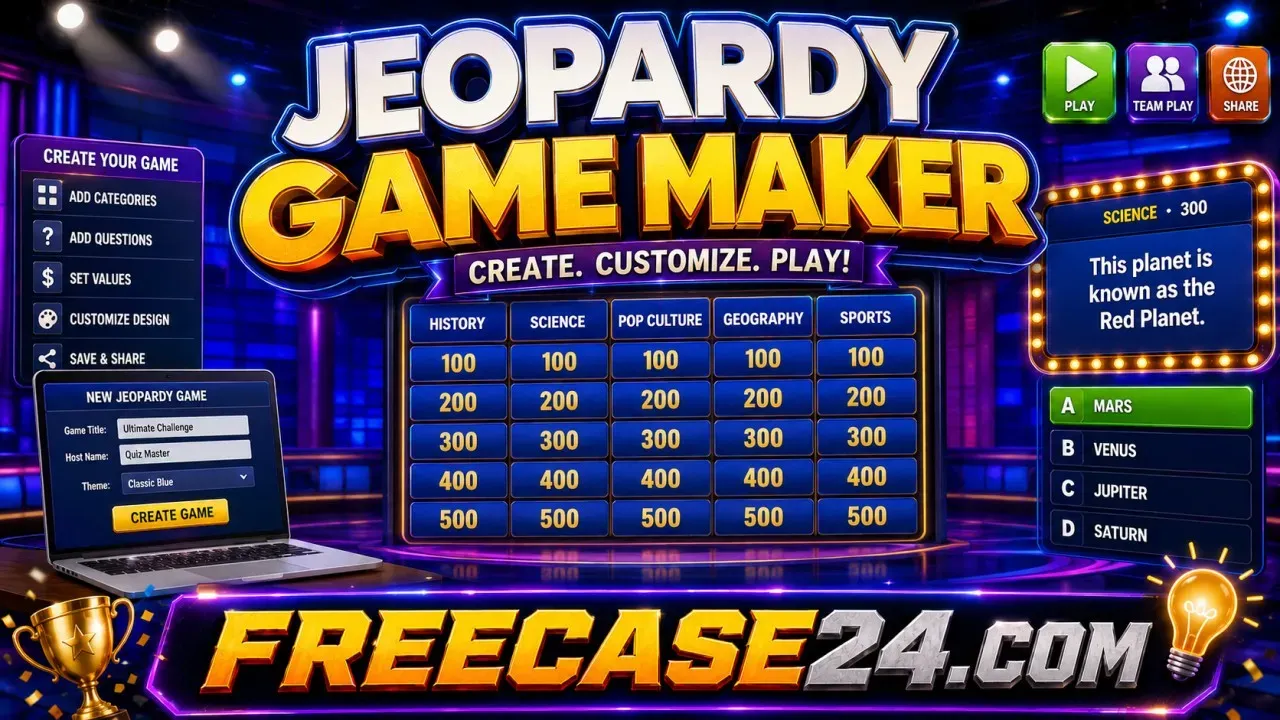
The classic television format uses 5 categories with 5 questions each, making a total of 25 clues per round. In my experience, this is the absolute sweet spot. Anything longer tends to drag, especially if you have a chatty crowd that loves to argue over the fine print of your answers.

Is it hard to set up a double jeopardy round?

Not if you use a dedicated jeopardy game maker. Most modern platforms allow you to simply duplicate your board or add a "Round 2" page, which automatically doubles the point values. This saves you from having to manually rebuild your layout from scratch.

The Wrap Up

At the end of the day, a great game night isn't defined by having the most high-tech setup in the world. It’s about the laughs, the friendly arguments, and that glorious feeling of pulling an obscure fact out of the depths of your brain to save your team from defeat. But having a tool that actually works sure does make getting to those fun moments a whole lot easier. Stop fighting with PowerPoint. Find a dedicated board creator, prep some fun categories, and let the games begin.