Game Beyond PS3: Complete Story & Gameplay Explained

Post Object ( [id] => 211 [created_date] => 1784764800 [slug] => game-beyond-ps3 [thumbnail_url] => /files/images/game beyond ps3.webp [title] => Game Beyond PS3: Complete Story & Gameplay Explained [content] =>

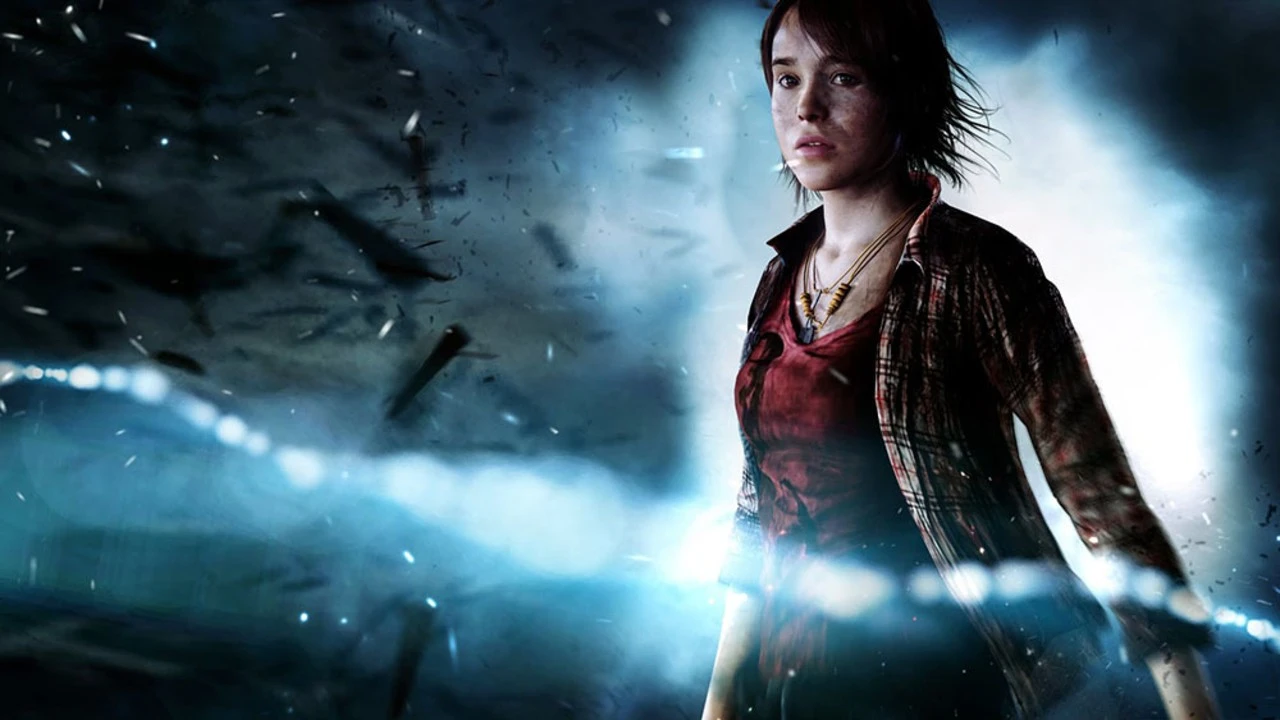
Few titles from the PlayStation 3 era tried to blur the line between a video game and a movie quite like Beyond: Two Souls. Often searched simply as the "game beyond ps3," this Quantic Dream release is less about scoring points and more about living through someone else's life, choices and all. At Freecase24, we cover a wide range of titles, but this one deserves a closer look because it does something most PS3-era games didn't even attempt: it puts story, performance, and emotion ahead of traditional gameplay systems.

This guide walks through the full story, how the gameplay actually works, and why the game beyond ps3 still gets talked about years after its release.

What Is Beyond: Two Souls ?

Beyond: Two Souls was developed by Quantic Dream and released for the PlayStation 3 in October 2013, later making its way to PlayStation 4 and PC as well. It was directed by David Cage, the same creative mind behind Heavy Rain, and it carries a similar philosophy: gameplay built around choices, quick-time events, and cinematic presentation rather than combat scores or level progression.

The game follows Jodie Holmes, a young woman who has been connected since birth to a mysterious entity named Aiden. Aiden is invisible to most people, tied to Jodie by an unseen link, and capable of interacting with the physical world in ways she cannot. That connection becomes the foundation for everything that happens across the story.

A few things set the game beyond ps3 apart from typical PS3 releases of its time:​

  • Dual character control players switch between Jodie and Aiden, each with very different abilities.
  • Motion-capture performances from well-known actors, giving the characters unusually lifelike expressions.
  • A non-linear timeline the story jumps between different points in Jodie's life rather than unfolding in strict order.
  • Player choices that shape outcomes decisions throughout the game lead to different possible endings.

The Story of Beyond: Two Souls

The narrative follows Jodie Holmes from childhood into early adulthood, tracing how her bond with Aiden shapes nearly every part of her life. As a child, she's studied by government researchers trying to understand the entity connected to her. As she grows older, that connection pulls her into increasingly dangerous situations, including government operations, supernatural encounters, and a search for answers about what Aiden actually is and where he came from.

Because the timeline isn't told in order, players piece the story together out of sequence, jumping between Jodie's traumatic childhood, her time being trained for covert missions, and later chapters where she's on the run and searching for a sense of normal life. This structure is part of what makes the game beyond ps3 stand out. Instead of following a straight line from beginning to end, the story reveals itself the way a memory might, in fragments that slowly form a complete picture.

Willem Dafoe plays Nathan Dawkins, the scientist who raised and studied Jodie, and his character adds a layer of moral complexity to the story since his intentions blur the line between protector and researcher. That tension between care and control runs through much of the plot.

How the Gameplay Works ?

Unlike traditional action or adventure titles, Beyond: Two Souls doesn't rely on combat mechanics, inventories, or skill trees. Instead, gameplay is built around a few core systems:​

  • Quick-time events (QTEs) timed button presses or controller movements during key action or emotional moments.
  • Exploration and dialogue walking through environments, interacting with objects, and choosing conversation options.
  • Aiden's separate abilities as the spirit-like entity, Aiden can move through walls, possess certain characters, and manipulate objects from a distance.
  • Branching choices many scenes offer decisions that affect how relationships and events unfold later in the story.

Playing as Aiden feels distinct from playing as Jodie. Since Aiden isn't bound by physical limitations, sequences with him often involve floating through a location, disrupting environments, or protecting Jodie from a distance. This dual control setup is one of the more memorable design choices in the game beyond ps3, since few titles from that generation let players toggle between a grounded human character and a nearly unrestricted spectral one within the same story.

Why Beyond: Two Souls Still Gets Discussed ?

Reception to the game was mixed when it launched. Some reviewers loved the ambition and performances; others felt the combat-style QTE sections were weaker than the emotional storytelling around them. Even so, the game holds a place in PS3 history because it pushed technical and narrative boundaries that few other console releases were attempting at the time.

Part of the reason people still search for the game beyond ps3 today comes down to a few lasting strengths:​

  • The performance capture technology was genuinely ahead of its time for a PS3 title.
  • The willingness to tell a fragmented, non-chronological story was unusual for a mainstream release.
  • It offered a meaningfully different type of playable experience compared to shooters and platformers dominating the era.
  • Multiple endings gave the game replay value beyond a single playthrough.

Key Characters Worth Knowing

Understanding a few central characters makes the story easier to follow, especially given its non-linear structure:​

  • Jodie Holmes the playable protagonist, whose life has been shaped by her connection to Aiden since infancy.
  • Aiden the invisible entity bound to Jodie, capable of moving through solid objects and briefly possessing people or animals.
  • Nathan Dawkins the scientist who raises and studies Jodie, torn between protecting her and using her abilities for research.
  • Ryan Clayton another researcher involved in Jodie's early life, whose relationship with her grows more complicated as the story progresses.

Each of these characters reappears across different points in the fractured timeline, so paying attention to their motivations early on makes later chapters land with more weight.

Memorable Chapters and Moments

A few sequences in the game beyond ps3 stand out as fan favorites, largely because they show off what the dual-character system can do:​

  • Early chapters where Jodie, still a child, first learns to control her connection to Aiden.
  • Tense government facility sequences that highlight the surveillance and control themes running through the story.
  • Combat-heavy missions where Jodie is trained for field operations, contrasting sharply with the quieter emotional scenes elsewhere in the game.
  • Later chapters where Jodie is on her own, relying entirely on Aiden for protection and problem-solving.

These shifts in tone, from quiet character drama to high-tension action, are part of what keeps the pacing varied across a story that could otherwise feel like one long cutscene.

Where This Fits Alongside Other Game Genres ?

If narrative-driven titles like this one interest you, it's worth exploring how differently other genres approach player engagement. Action Games tend to prioritize fast reflexes and combat feedback over story branching, which makes them a completely different kind of experience compared to something as slow-burning as Beyond: Two Souls.

Adventure Games are probably the closest genre relative here, since they also lean on exploration, dialogue, and choice-driven storytelling rather than pure mechanical challenge. If you enjoyed following Jodie's story, browsing through adventure titles on Freecase24 is a natural next step.

Racing Games sit at the opposite end of the spectrum entirely, built around speed, precision, and competition rather than narrative depth, which makes them a good palate cleanser if you want something faster-paced after a long story-driven session.

Puzzle Games offer a different kind of engagement too, rewarding logical thinking and pattern recognition instead of emotional investment in characters, which can be a nice change of pace between heavier narrative experiences.

And for anyone who prefers playing with friends rather than alone, Multiplayer Games bring a social layer that a single-player story like Beyond: Two Souls simply isn't built for, giving you a completely different reason to keep coming back to a game.

Frequently Asked Questions

Is Beyond: Two Souls a good game to start with if I've never played anything like it?

Yes. Its slower pace and choice-driven structure make it approachable even for players unfamiliar with quick-time-event style games.

Does the game beyond ps3 have multiple endings?

Yes, choices made throughout the story affect how later chapters and the ending play out.

Do I need to have played Heavy Rain first?

No. Beyond: Two Souls is a separate story with its own characters, so no prior knowledge is required.

Is the game more about story or gameplay mechanics?

Story and performance take priority. The gameplay systems exist mainly to support the narrative rather than stand on their own.

Final Thoughts

Beyond: Two Souls remains one of the more distinctive entries in PlayStation 3's library, a title that treated storytelling and performance as the main event rather than an add-on to traditional gameplay. Whether you're revisiting Jodie and Aiden's story or discovering the game beyond ps3 for the first time, it's a reminder of how much variety existed in that console generation. If narrative experiences like this one appeal to you, Freecase24 has a wide range of other genres worth exploring too, from fast-paced action to slower, choice-driven adventures, so there's always something new to try next.
[fields] => [extra_fields] => {"post-meta-title":"Game Beyond PS3: Complete Story & Gameplay Explained","post-meta-description":"Game Beyond PS3 follows an unforgettable adventure with interactive storytelling, exciting gameplay, and memorable moments for every player.","post-meta-keyword":"game beyond ps3","source_text":"","source_link":"","faq":""} )
Game Beyond PS3: Complete Story & Gameplay Explained

Few titles from the PlayStation 3 era tried to blur the line between a video game and a movie quite like Beyond: Two Souls. Often searched simply as the "game beyond ps3," this Quantic Dream release is less about scoring points and more about living through someone else's life, choices and all. At Freecase24, we cover a wide range of titles, but this one deserves a closer look because it does something most PS3-era games didn't even attempt: it puts story, performance, and emotion ahead of traditional gameplay systems.

This guide walks through the full story, how the gameplay actually works, and why the game beyond ps3 still gets talked about years after its release.

What Is Beyond: Two Souls ?

Beyond: Two Souls was developed by Quantic Dream and released for the PlayStation 3 in October 2013, later making its way to PlayStation 4 and PC as well. It was directed by David Cage, the same creative mind behind Heavy Rain, and it carries a similar philosophy: gameplay built around choices, quick-time events, and cinematic presentation rather than combat scores or level progression.

The game follows Jodie Holmes, a young woman who has been connected since birth to a mysterious entity named Aiden. Aiden is invisible to most people, tied to Jodie by an unseen link, and capable of interacting with the physical world in ways she cannot. That connection becomes the foundation for everything that happens across the story.

A few things set the game beyond ps3 apart from typical PS3 releases of its time:​

  • Dual character control players switch between Jodie and Aiden, each with very different abilities.
  • Motion-capture performances from well-known actors, giving the characters unusually lifelike expressions.
  • A non-linear timeline the story jumps between different points in Jodie's life rather than unfolding in strict order.
  • Player choices that shape outcomes decisions throughout the game lead to different possible endings.

The Story of Beyond: Two Souls

The narrative follows Jodie Holmes from childhood into early adulthood, tracing how her bond with Aiden shapes nearly every part of her life. As a child, she's studied by government researchers trying to understand the entity connected to her. As she grows older, that connection pulls her into increasingly dangerous situations, including government operations, supernatural encounters, and a search for answers about what Aiden actually is and where he came from.

Because the timeline isn't told in order, players piece the story together out of sequence, jumping between Jodie's traumatic childhood, her time being trained for covert missions, and later chapters where she's on the run and searching for a sense of normal life. This structure is part of what makes the game beyond ps3 stand out. Instead of following a straight line from beginning to end, the story reveals itself the way a memory might, in fragments that slowly form a complete picture.

Willem Dafoe plays Nathan Dawkins, the scientist who raised and studied Jodie, and his character adds a layer of moral complexity to the story since his intentions blur the line between protector and researcher. That tension between care and control runs through much of the plot.

How the Gameplay Works ?

Unlike traditional action or adventure titles, Beyond: Two Souls doesn't rely on combat mechanics, inventories, or skill trees. Instead, gameplay is built around a few core systems:​

  • Quick-time events (QTEs) timed button presses or controller movements during key action or emotional moments.
  • Exploration and dialogue walking through environments, interacting with objects, and choosing conversation options.
  • Aiden's separate abilities as the spirit-like entity, Aiden can move through walls, possess certain characters, and manipulate objects from a distance.
  • Branching choices many scenes offer decisions that affect how relationships and events unfold later in the story.

Playing as Aiden feels distinct from playing as Jodie. Since Aiden isn't bound by physical limitations, sequences with him often involve floating through a location, disrupting environments, or protecting Jodie from a distance. This dual control setup is one of the more memorable design choices in the game beyond ps3, since few titles from that generation let players toggle between a grounded human character and a nearly unrestricted spectral one within the same story.

Why Beyond: Two Souls Still Gets Discussed ?

Reception to the game was mixed when it launched. Some reviewers loved the ambition and performances; others felt the combat-style QTE sections were weaker than the emotional storytelling around them. Even so, the game holds a place in PS3 history because it pushed technical and narrative boundaries that few other console releases were attempting at the time.

Part of the reason people still search for the game beyond ps3 today comes down to a few lasting strengths:​

  • The performance capture technology was genuinely ahead of its time for a PS3 title.
  • The willingness to tell a fragmented, non-chronological story was unusual for a mainstream release.
  • It offered a meaningfully different type of playable experience compared to shooters and platformers dominating the era.
  • Multiple endings gave the game replay value beyond a single playthrough.

Key Characters Worth Knowing

Understanding a few central characters makes the story easier to follow, especially given its non-linear structure:​

  • Jodie Holmes the playable protagonist, whose life has been shaped by her connection to Aiden since infancy.
  • Aiden the invisible entity bound to Jodie, capable of moving through solid objects and briefly possessing people or animals.
  • Nathan Dawkins the scientist who raises and studies Jodie, torn between protecting her and using her abilities for research.
  • Ryan Clayton another researcher involved in Jodie's early life, whose relationship with her grows more complicated as the story progresses.

Each of these characters reappears across different points in the fractured timeline, so paying attention to their motivations early on makes later chapters land with more weight.

Memorable Chapters and Moments

A few sequences in the game beyond ps3 stand out as fan favorites, largely because they show off what the dual-character system can do:​

  • Early chapters where Jodie, still a child, first learns to control her connection to Aiden.
  • Tense government facility sequences that highlight the surveillance and control themes running through the story.
  • Combat-heavy missions where Jodie is trained for field operations, contrasting sharply with the quieter emotional scenes elsewhere in the game.
  • Later chapters where Jodie is on her own, relying entirely on Aiden for protection and problem-solving.

These shifts in tone, from quiet character drama to high-tension action, are part of what keeps the pacing varied across a story that could otherwise feel like one long cutscene.

Where This Fits Alongside Other Game Genres ?

If narrative-driven titles like this one interest you, it's worth exploring how differently other genres approach player engagement. Action Games tend to prioritize fast reflexes and combat feedback over story branching, which makes them a completely different kind of experience compared to something as slow-burning as Beyond: Two Souls.

Adventure Games are probably the closest genre relative here, since they also lean on exploration, dialogue, and choice-driven storytelling rather than pure mechanical challenge. If you enjoyed following Jodie's story, browsing through adventure titles on Freecase24 is a natural next step.

Racing Games sit at the opposite end of the spectrum entirely, built around speed, precision, and competition rather than narrative depth, which makes them a good palate cleanser if you want something faster-paced after a long story-driven session.

Puzzle Games offer a different kind of engagement too, rewarding logical thinking and pattern recognition instead of emotional investment in characters, which can be a nice change of pace between heavier narrative experiences.

And for anyone who prefers playing with friends rather than alone, Multiplayer Games bring a social layer that a single-player story like Beyond: Two Souls simply isn't built for, giving you a completely different reason to keep coming back to a game.

Frequently Asked Questions

Is Beyond: Two Souls a good game to start with if I've never played anything like it?

Yes. Its slower pace and choice-driven structure make it approachable even for players unfamiliar with quick-time-event style games.

Does the game beyond ps3 have multiple endings?

Yes, choices made throughout the story affect how later chapters and the ending play out.

Do I need to have played Heavy Rain first?

No. Beyond: Two Souls is a separate story with its own characters, so no prior knowledge is required.

Is the game more about story or gameplay mechanics?

Story and performance take priority. The gameplay systems exist mainly to support the narrative rather than stand on their own.

Final Thoughts

Beyond: Two Souls remains one of the more distinctive entries in PlayStation 3's library, a title that treated storytelling and performance as the main event rather than an add-on to traditional gameplay. Whether you're revisiting Jodie and Aiden's story or discovering the game beyond ps3 for the first time, it's a reminder of how much variety existed in that console generation. If narrative experiences like this one appeal to you, Freecase24 has a wide range of other genres worth exploring too, from fast-paced action to slower, choice-driven adventures, so there's always something new to try next.